New Atlantic Wall Netherlands walking and cycling routes have recently been launched. With this lasting reminder of the struggle for freedom, Liberation Route Europe brings to a close its anniversary year, during which there was widespread focus on commemorating and celebrating the end of the Second World War 80 years ago. This is the first time that the history of the Atlantic Wall in the Netherlands can be explored in such an active and comprehensive way.
Wikimedia Commons door Akoning1
Liberation Route Europe
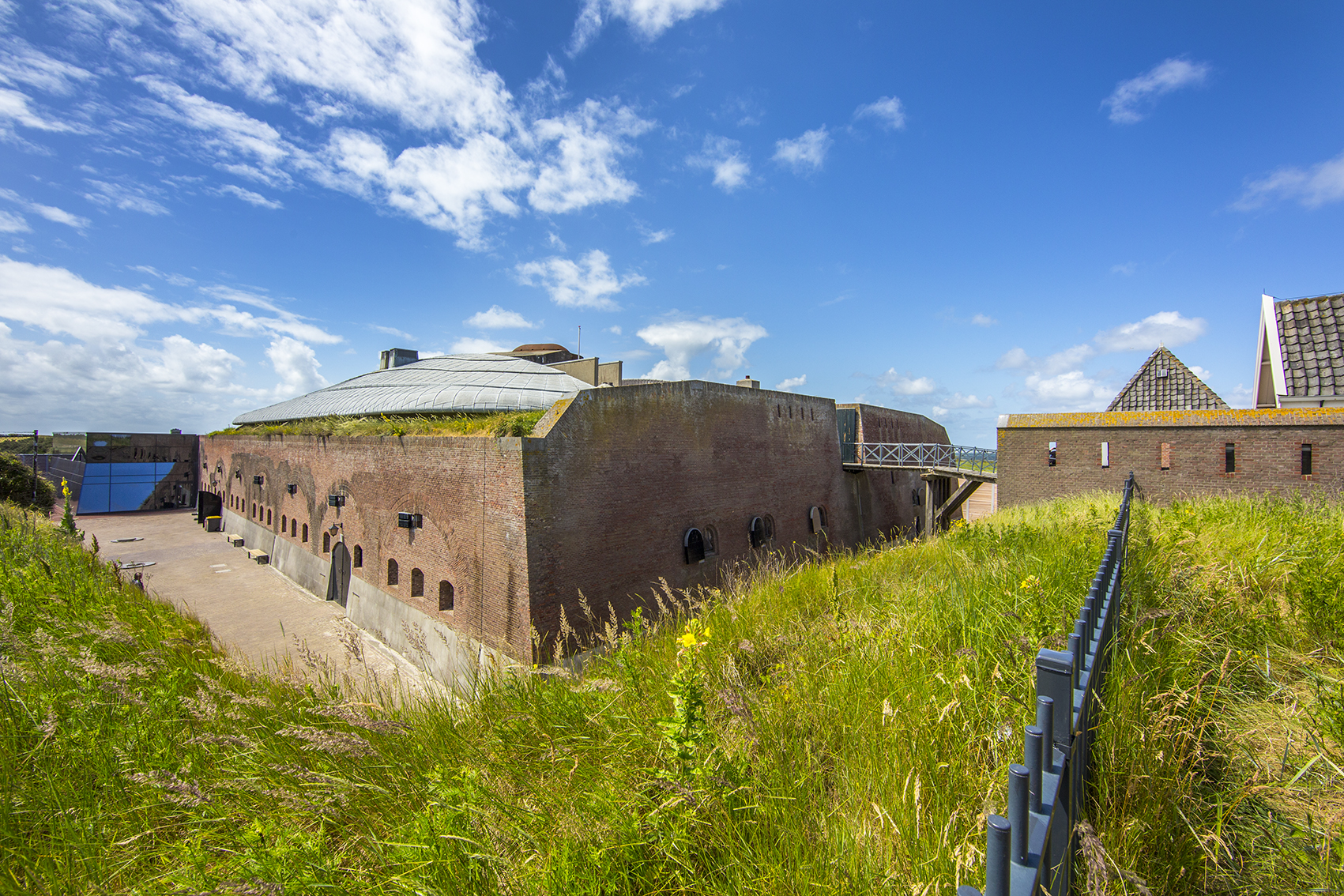
Fort Kijkduin, home to the Atlantic Wall Centre in Den Helder – one of the most remarkable sites of the Atlantic Wall heritage in the Netherlands – was the venue for the launch of the Atlantic Wall Netherlands walking and cycling routes. During the Second World War, the Atlantic Wall was a vast defensive line erected by the German occupiers stretching from Norway to Spain to deter the Allies from daring to launch an invasion.
Now it serves as a reminder of the struggle for freedom. “It is the most tangible remnant of the years of occupation, and it is important to preserve it for future generations. Not out of admiration, but to show that we never want this to happen again. You do that by treating it with care and by highlighting it in a coherent manner,” said Edwin Raap of the Cultural Heritage Agency of the Netherlands at the launch of the Atlantic Wall Netherlands walking and cycling routes.
The LRE Foundation is the initiator of the routes, which, from Zeeland to Groningen, clearly illustrate the sacrifices made in the run-up to liberation and the regaining of freedom. This is the first time that the history of the Atlantic Wall in the Netherlands can be explored in this active and coherent manner. Numerous events along the way recount the fraught and richly varied history of the Atlantic Wall in the Netherlands.
With this launch, the Atlantic Wall in the Netherlands officially becomes part of the Liberation Route Europe, recognised by the Council of Europe as a Cultural Route. More than 10,000 kilometres of walking and cycling routes pass by museums, monuments, final resting places and other sites across Europe that commemorate the final phase of the Second World War.
650 kilometres: 5 long-distance walking and cycling routes, 100 stories and 5 circular walking and cycling routes
In the Netherlands, the route covers a total of over six hundred and fifty kilometres, featuring over a hundred stories in Dutch, English and German, spread across five long-distance walking and cycling routes. From Zeeland (105 km) through South and North Holland (150 and 180 km respectively) to Friesland (100 km) and Groningen (105 km).
Three circular walking and cycling routes are linked to the main route: a ‘Vlissingen Cycling Loop’ (45 km), an ‘IJmuiden Loop’ (approx. 20 km; walking and cycling) and a ‘Den Helder Loop’ (7 km walking and 12 km cycling). The complete ‘Atlantic Wall Netherlands’ collection comprises fourteen routes. A special addition to this is the Wadden Sea region, with its own unique offerings. The routes and story locations are being promoted through an international campaign and, where possible, are marked in the field with QR codes and memorials, the Vectors of Memory.
A variety of perspectives and themes are explored
All routes are aligned as far as possible with the junctions of the walking and cycling network in the Netherlands, with the beautiful surroundings often standing in stark contrast to the poignant stories that make walkers and cyclists aware of the value of our lives in freedom.
The military narrative is presented from various perspectives and themes. But the routes also explore the consequences of the construction of the Atlantic Wall for civilians, collaboration with the occupying forces, resistance against the occupiers, forced labour, terror, bombings, new roles for heritage sites and their integration into the natural landscape.
Fully accessible online
The routes, bunkers, museums, ‘dragon’s teeth’, tank ditches, memorial sites and stories can be found as a route collection on the online portal www.liberationroute.com, complete with a dynamic map, web app and route planner that invites visitors to explore the regions for themselves. There is no physical signage. The Atlantic Wall Netherlands walking and cycling routes thus make a sustainable and lasting contribution to remembrance tourism in the coastal provinces and on the Wadden Islands.
Regional collaboration
The Atlantic Wall Netherlands route collection was developed in collaboration with historians, historical societies, bunker museums, and route and policy makers in the various regions. The project was made possible in part by Vfonds, the fund that supports hundreds of projects each year that contribute to peace, freedom and democracy.
Source: Liberation Route Europe
Routes around Den Helder, Zandvoort and IJmuiden
-
Bunkerwandeling
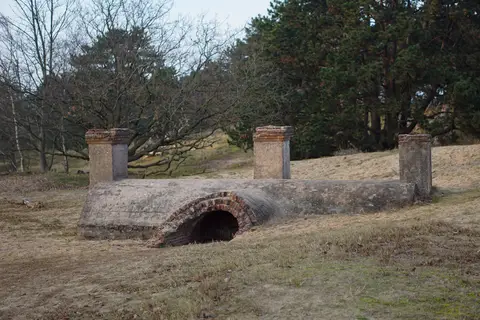
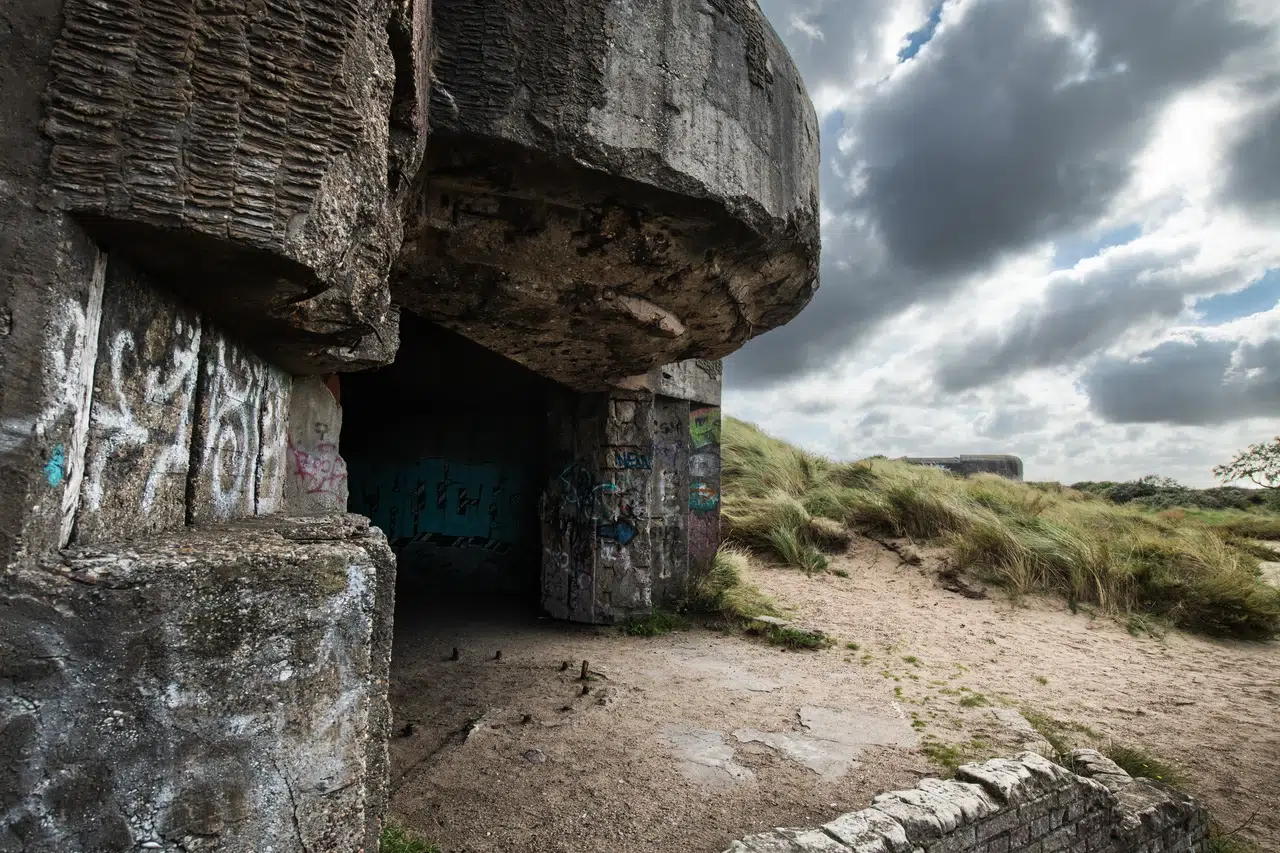
In the Amsterdam Water Supply Dunes there are many bunkers, about 400. This route runs along several bunkers. They were built by Germany during the Second World War and are part of the Atlantic Wall.
- Start location
- Zandvoort
- Distance
- 5.3 km
-
Ziltepad - Den Helder - Huisduinen
Discover Willemsoord in Den Helder, the former Royal Navy shipyard that is now a vibrant open-air museum and entertainment center. Explore the rich maritime history and impressive architecture.
- Start location
- Den Helder
- Distance
- 13.5 km
-
Helderse Duinen
Those traveling to Den Helder are rewarded with a surprising route. From winding dune paths to the dead-straight Wadden Sea dike.
- Start location
- Den Helder
- Distance
- 16.1 km
-
IJmondpad
This three-day walking route in the IJmond region allows you to experience culture and nature up close. The IJmondpad connects the characteristic landscapes of the municipalities of Heemskerk, Velsen, Beverwijk, and Castricum.
- Start location
- Castricum
- Distance
- 77.2 km
Atlantic Wall routes in North Holland
At various points along the main route, there are walking and cycling loops: an ‘IJmuiden Loop’ (approx. 20 km; walking and cycling) and a ‘Den Helder Loop’ (7 km walking and 12 km cycling). In other towns along the North Holland coast, such as Zandvoort and Den Helder, you’ll also find routes passing bunkers. The complete ‘Atlantic Wall Netherlands’ collection comprises fourteen routes. The Wadden Islands form a special addition to this, with their own unique offerings.