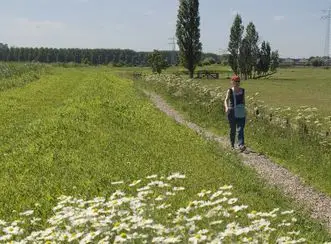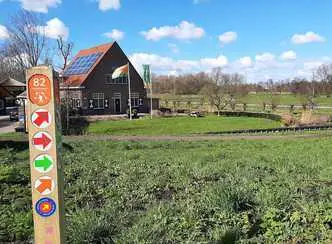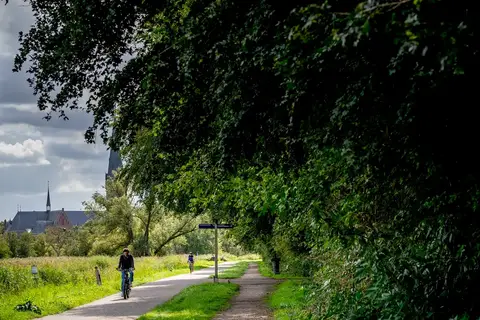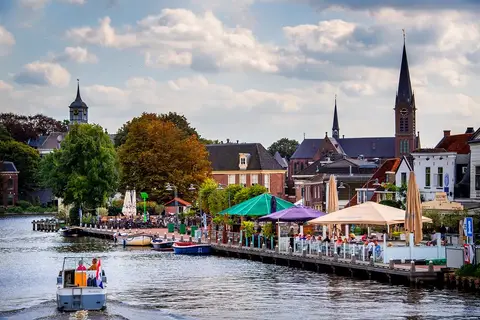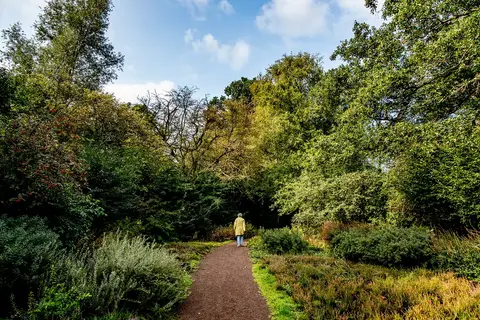
Explore the history of the Amstelveen polders during this bike tour through Groenelaan, Waardhuizen, and the village of Nes aan de Amstel. This part of Amstelveen originated in what was formerly known as the Bovenkerkerpolder. Many traces can still be found in the landscape and buildings that tell the history of Amstelveen.
History of the polder
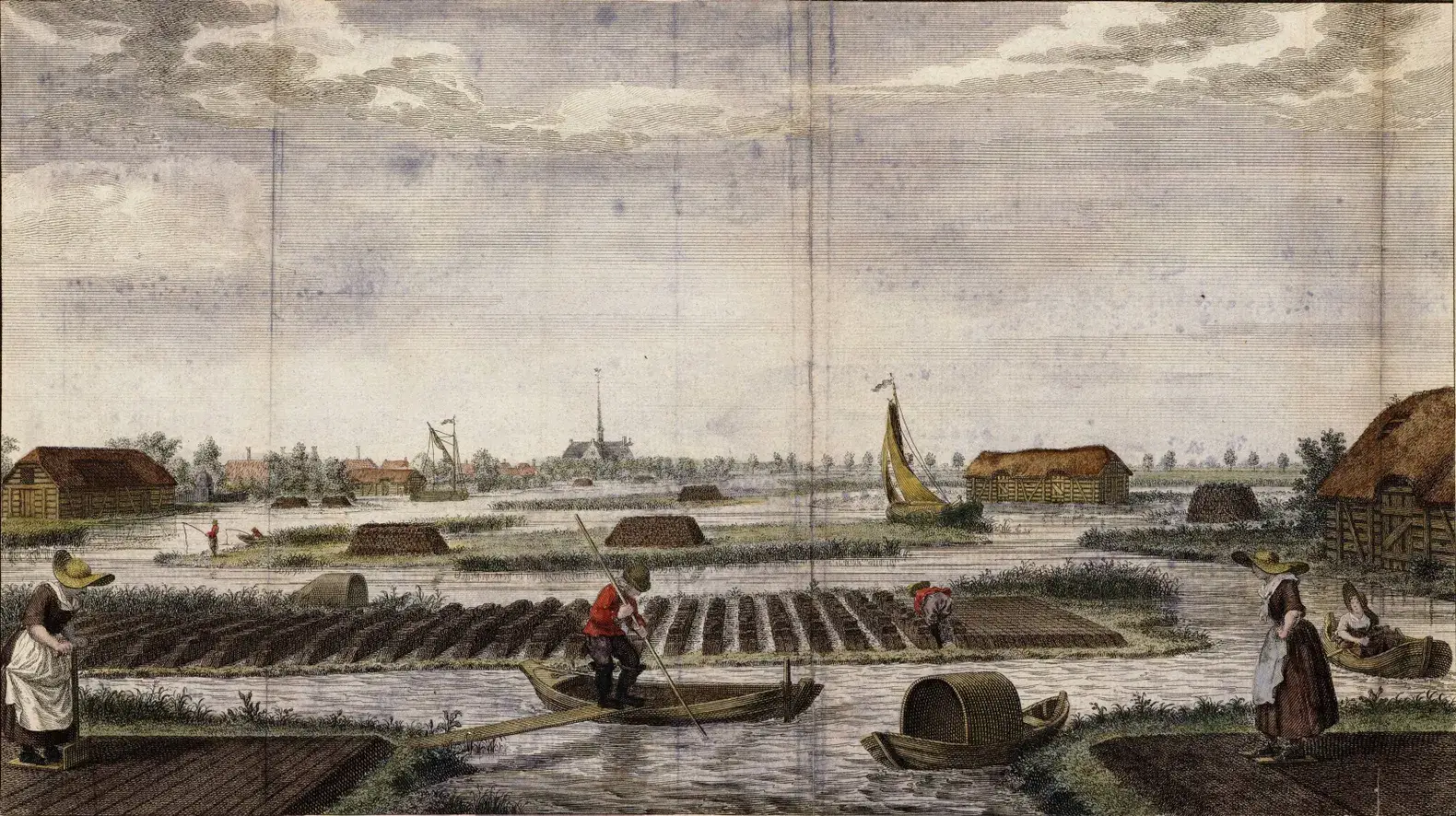
The Bovenkerkerpolder has a rich history. In the past, the area consisted mainly of marshland, until people first moved to the area about a thousand years ago. They soon dug ditches to make the land suitable for agriculture.
The area consisted largely of peat soil, which could be used to produce turf as fuel. Due to the extensive digging for turf, a lake formed. In 1764, this lake was drained, allowing construction to take place.
Nes aan de Amstel
The village of Nes has convivial traditions, including the Nes Cycling Race and the annual village festival. Every year, the Slob and Ditch Race is held at the village festival, a competition across fields and ditches.
The village has a beautiful church, St. Urbanus Church. This cruciform basilica was built between 1889 and 1891 by architect Joseph Cuypers.
The Black Cat
Along the Amstel near Nes lie three neighborhoods: De Nes, De Zwaluwebuurt, and De Zwarte Kat. The latter neighborhood is named after a café that stood here for centuries. A gable stone with a black cat can still be found in the building.
A little further on stands the 'De Oude Molen' gunpowder factory. The gunpowder produced here was intended for warships and fireworks, among other things. The factory exploded twice, the last time in 1953.
Groenelaan and Waardhuizen
In 1965, a great deal of new construction was added to the Bovenkerkerpolder. A quiet neighborhood was intended to be created around Groenelaan, from which the neighborhood derives its name.
Waardhuizen was built about ten years later. Few apartment buildings were constructed here, with mainly single-family homes. Much attention was paid to building residential courtyards and playgrounds.