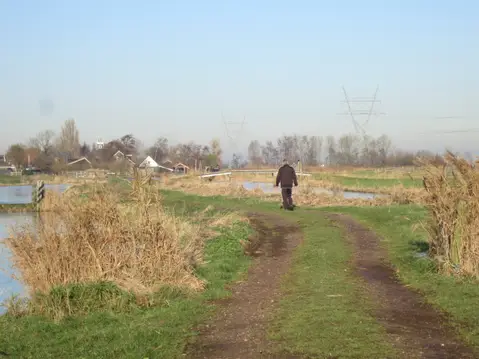
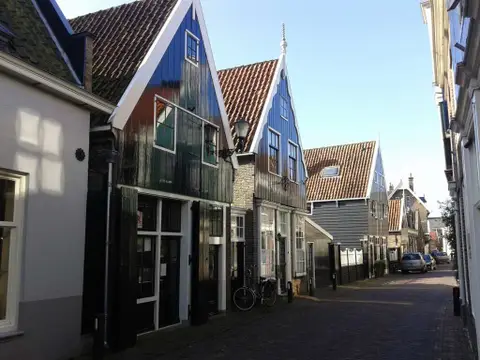
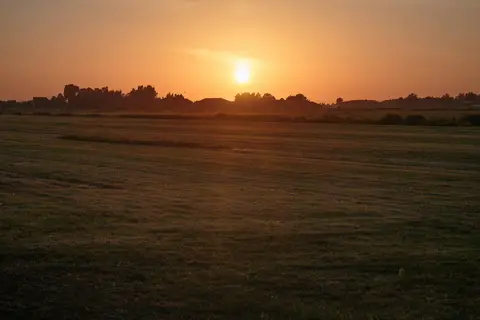
The Leeghwaterroute is a 47-kilometre cycling route, four metres below sea level, through the seventeenth-century polders De Schermer and De Beemster. The route takes you past turning windmills, long straight roads, winding dikes and picturesque villages such as Middenbeemster, De Rijp, Schermerhorn and Driehuizen.
A village that once lay by the sea
The route starts at the Het Wollandje car park in De Rijp, the main village of the former Schermereiland. This area once lay between the lakes Schermer and Beemster and at the time housed one of the largest herring fleets in North Holland. After the land reclamation, the people of De Rijp specialised in whaling towards Greenland, and the village still preserves traces of its seafaring past. The Raadhuis, designed by Jan Adriaensz. Leeghwater himself, now houses VVV De Rijp.
Windmills, tulips and a sweet shop
Along the way, you will pass the smallest sweet shop in the Netherlands in Graft and the accompanying beautiful little town hall with a tombstone floor. At the Zwarte Kerkje, one of the rare remaining farmhouse churches, you might cycle past colourful tulip fields in the spring. From a small bridge, you can see seven windmills at once in clear weather, one of which, Museummolen Schermer, has been set up as a museum. Korenmolen De Nachtegaal, the only windmill in De Beemster, is also on the route.
Writers and a fortress
In Middenbeemster, the Betje Wolffmuseum commemorates the famous eighteenth-century writing duo Betje Wolff and Aagje Deken. Fort Spijkerboor, part of the 135-kilometre-long Stelling van Amsterdam, is the largest and most modern fort of that defence line, complete with cannons and an armoured rotating turret. The route ends back at Het Wollandje, after a visit to the Grote Kerk van De Rijp from 1629.