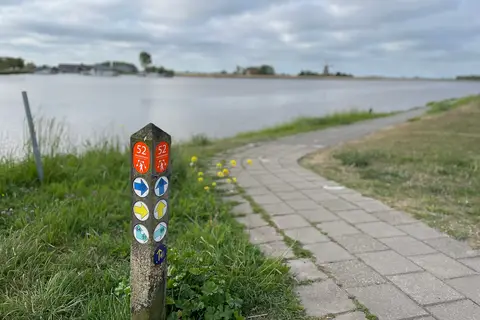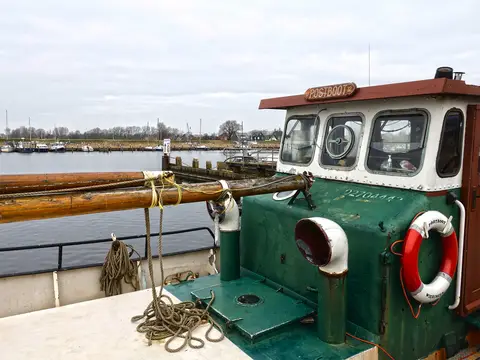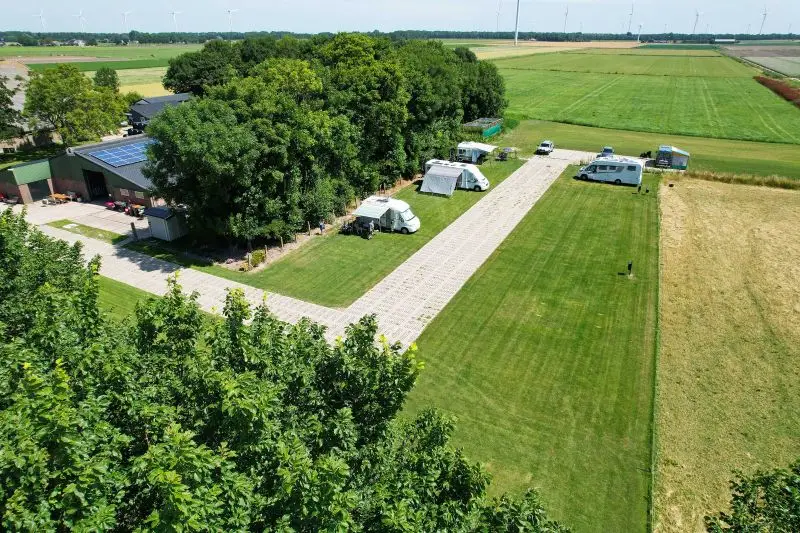
This route takes you through Hollands Kroon, a beautiful region in North Holland home to villages such as Den Oever and Wieringerwaard. You will enjoy beautiful vistas and the former island of Wieringen.
On Wieringen
For centuries, Wieringen lay as an island in the Zuiderzee. In 1924, the island was 'connected' to North Holland through dike construction and land reclamation. From the moraine ridges in this area, you have beautiful views over the low-lying polders, the Amstelmeer, the IJsselmeer, and, of course, the Wadden Sea. A few erratics still lie on the former island, and here and there you can also see some authentic garden walls, about a meter high, that served as property boundaries.
Robbenoord Forest
You cycle a short distance through the Robbenoord Forest, which was planted in the 1930s with oaks, alders, and beeches. Wieringerwaard was once situated on the Zuiderzee but is now a picturesque village in the middle of the polder. Here you can see the White Church from 1865. A little further on, you pass the Polderhuis, the first building constructed in the village in 1612. At Restaurant Basalt, you can enjoy coffee, lunch, or dinner with a view of the fishing harbor.
Turbulent Wieringen
Wieringen has a rich and eventful history. In the ninth century, the island briefly served as a base for Danish Vikings. Ships returning from the East during the VOC era would land sick sailors ashore on the west side of Wieringen—roughly within sight of the ports of Enkhuizen, Hoorn, and Amsterdam. This quarantine was intended to prevent the spread of diseases on land. After the First World War, from 1918 to 1923, Wieringen served as a place of exile for the fugitive German Crown Prince Wilhelm. The story goes that blacksmith Jan Luyt from Hippolytushoef taught the Crown Prince how to forge horseshoes. Would you like to cycle around Wieringen again? Then be sure to ride route 117035.