18.7 km circular walk through the West Frisian polder landscape, past meadow birds, a historic wading pool, and the Groene Pade water reservoir in Hoogwoud.
Hidden polder, living landscape
The blue Langereis Route takes you through one of the quietest and least discovered corners of West Friesland. Starting at the De Weijver recreation area near Hoogwoud, you take a circular walk of nearly 19 kilometers through a truly agricultural polder landscape. You walk along historical reclamation boundaries, over dikes, and through water storage areas — with plenty of space, silence, and sweeping views over the open countryside. This blue variant is an extension of the yellow Langereis Route: the extra loop along the Groene Pade and the Langereis Canal makes this the longer, richer version of the tour.
Along streams, meadow birds and water
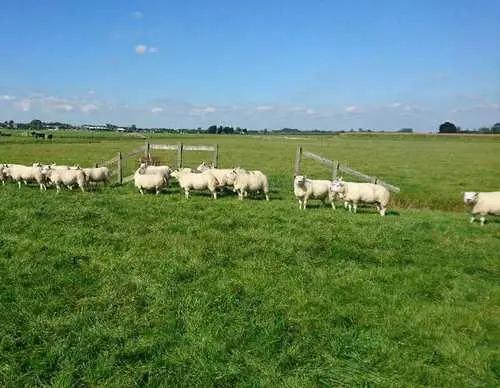
You start at De Weijver and soon walk into the open polder landscape. The route winds along quiet polder roads through the villages of Aartswoud, Hoogwoud, Gouw, and De Weere. All around you, the West Frisian agricultural landscape stretches out: meadows, ditches, and the characteristic low skies over the polder. In spring, you can hear the black-tailed godwit, the lapwing, and the redshank — this area is an important meadow bird habitat.
Halfway along the route, you reach the 'Opmeerder Wuiver', a unique piece of landscape that owes its name to the medieval reclamation history of this area. You are literally walking along a centuries-old border — the former boundary between Hoogwoud and Opmeer. The Gouwe, a peat river that was excavated as early as the 10th or 11th century, meanders along the Wuiver. In spring, the air here smells of grass and damp earth, and you can see the land slowly awakening.
The blue loop adds an extra dimension: you walk through the Groene Pade water reservoir and along the quays beside the Langereis canal. This section feels different from the rest of the route — quieter, more expansive, with water on both sides. An unexpected highlight on a route you might not find on the front page of a travel guide, but which is all the more rewarding when you discover it.
Highlights along the way
- The Opmeerder Wuiver — A centuries-old reclamation boundary that now serves as a walking path. You walk along a historic line that once marked the territorial and municipal boundaries, alongside the peat riverlet the Gouwe.
- Boundary Post Hoogwoud/Opmeer — The old boundary post is still standing. A modest but special monument: a silent witness to how this land was organized for centuries.
- Groene Pade Water Storage — A modern water storage area that has simultaneously become a valuable nature reserve. Peace, reeds, and space — a special place, especially in the early morning.
- Langereis Canal — You walk along the quays beside this canal. The water reflects the sky, giving the route an open, expansive character typical of West Friesland.
- Meadow birds in the polder — During the breeding season (March–June), this area is heavily used by black-tailed godwits, lapwings, and redshanks. Take a leisurely walk and enjoy the sounds of the polder in the spring.
A landscape built on reclamation
West Friesland is one of the oldest reclamation areas in North Holland. From the early Middle Ages, farmers systematically constructed ditches, dikes, and roads to make the peatland habitable. The 'wuivers'—the side boundaries of reclamation blocks—later formed the basis for paths, dikes, and even municipal boundaries. The Gouwe, the peat river running along the Wuiver, dates back to the 10th or 11th century and was once the main drainage channel for the higher-lying peatlands of Hoogwoud. That long history is still visible in this landscape.
Tips and practical information
- Dogs: Dogs are not allowed on the Opmeerder Wuiver. This area is a meadow bird area and is closed to dogs.
- Breeding season: The Opmeerder Wuiver is closed from March 15 to June 15 due to the breeding season. Plan your walk outside this period if you want to walk the entire route.
- Public transport accessibility: Hoogwoud is accessible by bus from Alkmaar and Hoorn. Take the bus to Hoogwoud or Opmeer and walk or cycle to the starting point, De Weijver. This way, you leave the car at home and step directly into the landscape.
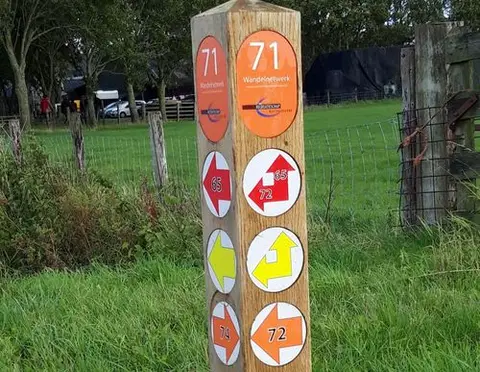
- Marking: The route is marked with blue markings.
- Accessibility: The route follows unpaved polder paths and embankments and is not suitable for wheelchairs or strollers.
- Please note: Check whether the Wuiver is open before departure, especially in spring. Polder paths can be muddy during prolonged rainfall — sturdy walking shoes are recommended.
Kenmerken
- Onverhard
- Honden niet toegestaan